Answer - D. Immune to Hepatitis B due to previous vaccination
Explanation - This patient has an isolated positive hepatitis B surface antibody. This means that she has immunity to hepatitis B as a result of prior vaccination, and does not need repeat hepatitis B vaccination. Importantly, her hepatitis B surface antigen, the marker of active infection, was negative as well. The hepatitis C antibody is used to screen patients for infection, but can not determine active infection or immunity.
What if our patient had been positive for hepatitis B core antibody (cAb)?
-
This would indicate immunity from hepatitis B due to previous infection, not from vaccination.
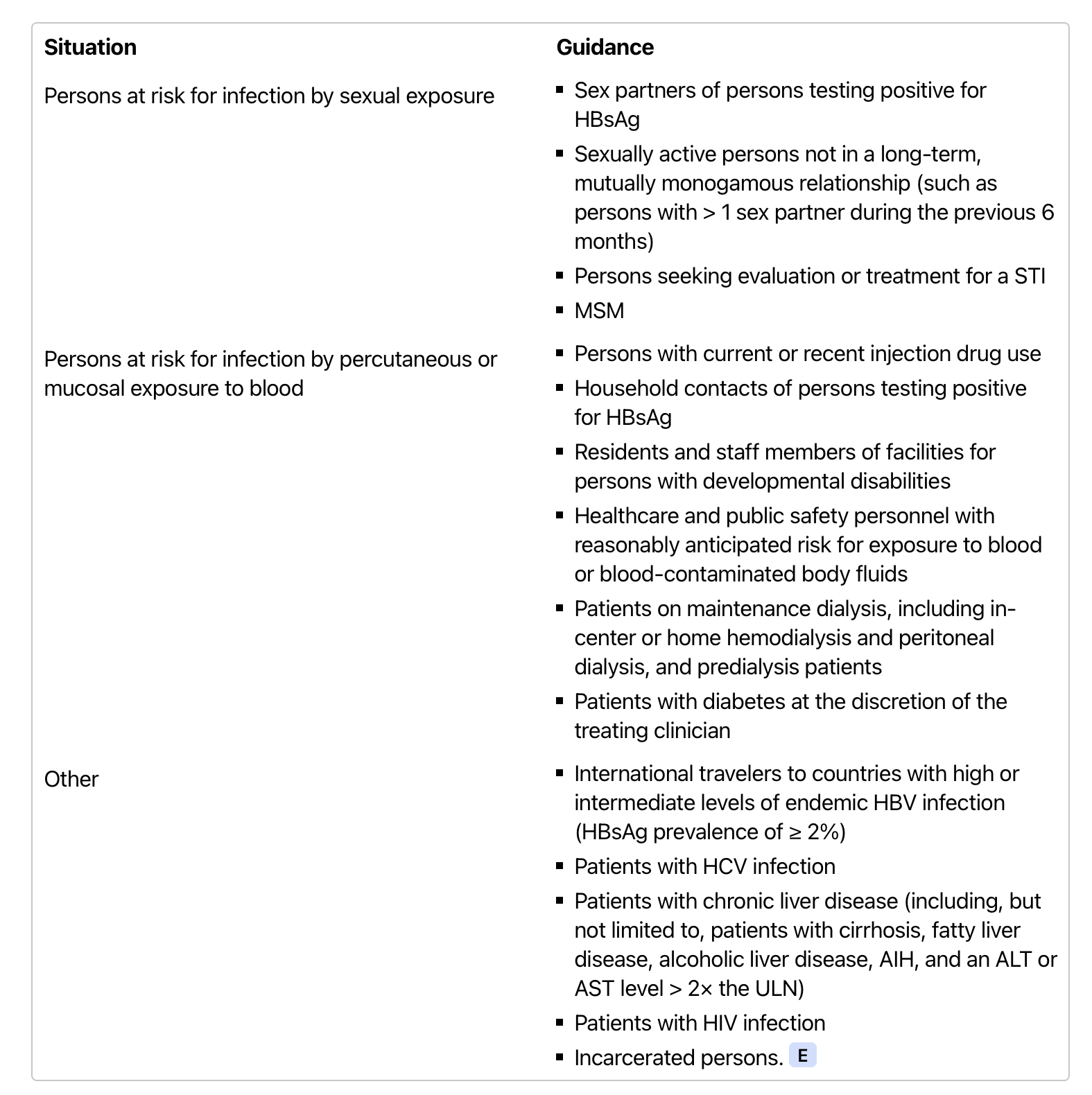
When should you screen for hepatitis B or C?
-
Screen for hepatitis B virus (HBV) infection in patients with HIV infection (A) and other people at high risk of infection (B), such as:
- Persons born in countries with > 2% HBV prevalence
- Patients with hepatitis C infection
- Injection drug users
- Incarcerated people
-
Patients with elevated ALT levels (> 19 IU/L in females and > 30 IU/L in males)
- Patients with ESRD
- Pregnant patients
- Men who have sex with men
-
Obtain one-time, routine opt-out hepatitis C virus (HCV) testing in all persons > 18 years of age. (B)
-
Obtain annual HCV testing in all injection drug users, patients with HIV and having sex with men, and men having sex with men taking PrEP. (B)
Acute hepatitis B infection varies in presentation, but generally has a prodromal period of a few days to 2 weeks. It can result in acute liver failure, but more commonly leads to mild symptoms of jaundice, nausea, anorexia, and right upper quadrant pain. Most patients (> 95%) with acute HBV infection recover spontaneously and will not progress to chronic HBV infection.
See below for a comprehensive review of hepatitis B serology interpretation.