✅ Summarized concussion guidelines
🧠 Review the common signs and symptoms of concussions
⭐ Review the American Medical Society for Sports Medicine Consensus Statement on sports-related concussion
📈 And more!
|
|
|
In-depth review of key recent guidelines
|
|
|
This week, we'll explore the latest clinical guidelines on concussions. Concussions, a common type of traumatic brain injury, often occur in athletic activities or accidents. Recognizing the underlying causes and mechanisms of concussions is crucial for proper diagnosis and prompt treatment. These injuries result from direct impact to the head or body, causing the brain to move rapidly within the skull.
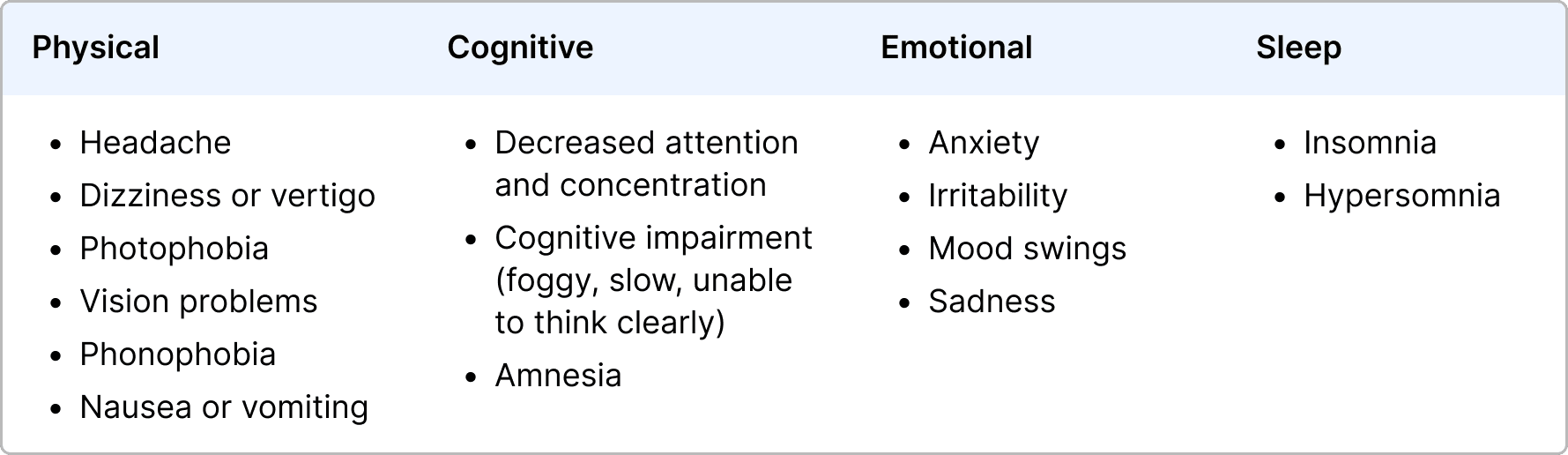
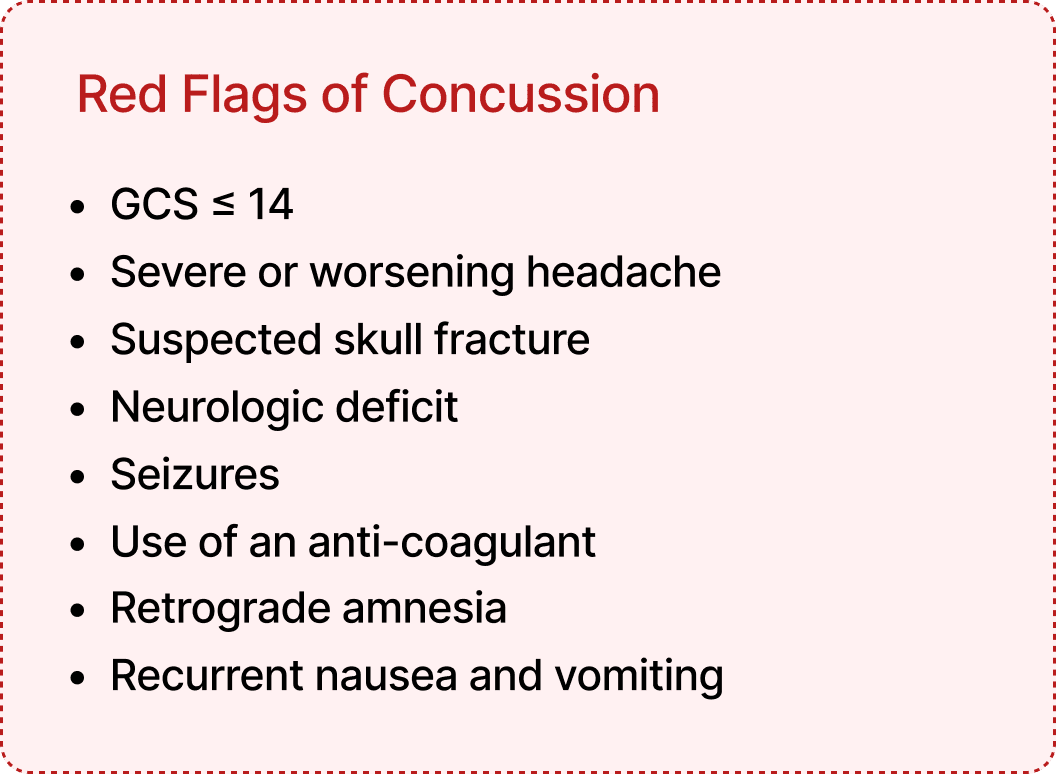
Concussions can lead to symptoms such as dizziness, fogginess, nausea, headache, and a feeling of unsteadiness. Identifying the specific cause and evaluating for red flag signs (such as repeated emesis) can help guide treatment decisions and determine the patient’s readiness to return to sports, work, or school. Implementing appropriate management strategies, including relative rest, a gradual return to activity, and close monitoring of symptoms, is crucial for ensuring the patient’s safety and minimizing the risk of long-term consequences.
Concussion Symptoms and Red Flag Signs:
|
|
|
There is a lack of consensus in using the term “Concussion” versus “mild traumatic brain injury” (mTBI). In the 2022 consensus on concussion in sports, concussion was defined as a subset of traumatic brain injury (TBI) with a complex pathophysiology and variable clinical signs that aren’t explained by the use of medications, alcohol, or other injuries.
The estimate of traumatic brain injuries that present to the emergency department in the United States each year is approximately 1.7 million. Common causes of concussion, or mild traumatic brain injury, include motor vehicle crashes, assault, recreational activity, and sports-related concussions (SRC).
Guidelines on the evaluation and management of concussion are from the Living Concussion Guidelines (LCG 2023; 2022; 2017), the American Academy of Ophthalmology (AAO/AAP/AACO/AAPOS 2022), and the United States Department of Defense (DoD/VA 2021; 2016), among others.
For a full review of concussion guidelines, head over to Pathway. We’ll cover some key takeaways below (with the recommendation strength in parentheses).
1. Diagnostic Investigations:
-
Elicit a thorough history (using a standardized concussion symptom inventory tool, including cognition screening), perform a physical examination, and assess concurrent potential contributing factors, such as comorbid medical conditions and mental health conditions, to guide initial medical management in patients with concussion. (B)
-
Use the Canadian CT Head Rule to decide on the need for neuroimaging in acute presentation (within 24-48 hours post-injury), recognizing that anticoagulated patients and patients with bleeding disorders require extra consideration. (B)
- Do not obtain diagnostic imaging in the initial evaluation of patients with mild acute head trauma if not required by a clinical decision rule. When it is indicated by a clinical decision rule, obtain a non-contrast head CT. (D)
-
Do not obtain plain skull X-rays for patients with a clinical history of mTBI. (D)
-
Obtain MRI in patients presenting at the post-acute phase (after 48 hours post-injury) of mTBI deemed to require neuroimaging. (B)
-
Do not obtain routine biochemical markers, such as S100, NSE, and serum tau, in patients with mTBI, except in the context of a research protocol. (D)
-
Obtain routine monitoring for depression and anxiety after a concussion. Consider referring to a mental health specialist if needed. (B)
-
Do not obtain diagnostic imaging in pediatric patients with minor acute blunt head trauma (excluding suspected abusive head trauma) with very low risk for clinically important brain injury per PECARN criteria. (D)
- Consider assessing for smooth pursuit, saccades, vestibulo-ocular reflex, convergence, and accommodation, in addition to visual acuity testing, to help identify these problems after a concussion. (E)
⭐ Check out these helpful calculators for when assessing concussion
Canadian CT Head Rule: Evaluate the need for a CT in the setting of TBI
New Orleans Criteria: Evaluate the need for a CT in the setting of TBI
PECARN: Evaluate the need for head imaging in pediatric patients
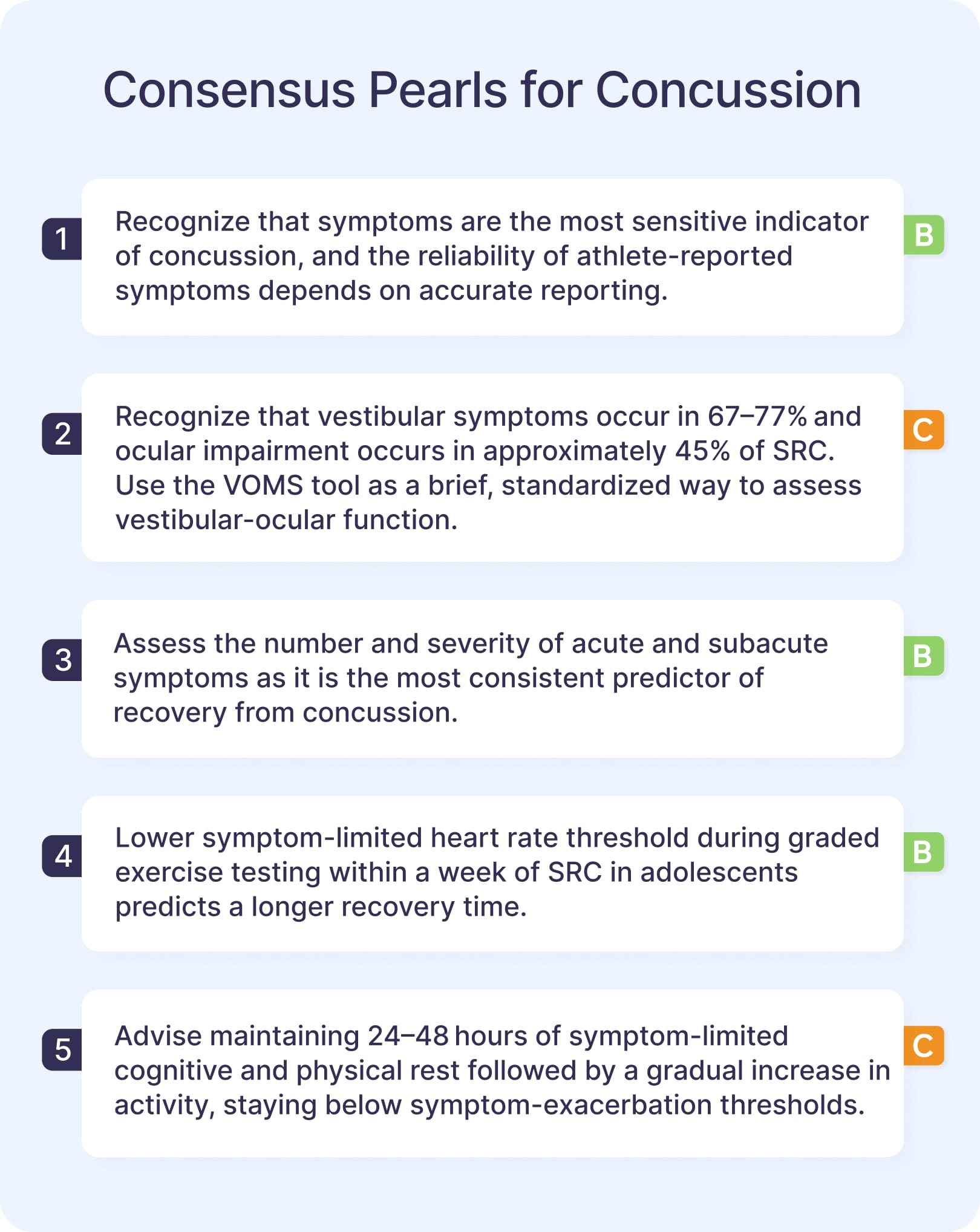
2. American Medical Society for Sports Medicine Consensus Statement Pearls (2019):
-
Diagnosis of sports-related concussion:
-
Recognize that non-specific symptoms such as headaches, mood changes, fogginess, dizziness, visual changes, fatigue, and neck pain are all associated with a concussion but can also originate from other etiologies. (C)
-
Recognize that symptoms may be delayed in onset or initially unrecognized by the athlete. Establish the diagnosis of concussion clinically by carefully synthesizing history and physical exam findings as the injury evolves. (C)
-
Sideline assessment of sports-related concussion:
- Remove the athlete from the play immediately and obtain prompt evaluation in the presence of loss of consciousness (LOC), impact seizure, tonic posturing, gross motor instability, confusion, or amnesia. (C)
-
Suspect a more serious head injury in patients with prolonged LOC, severe or worsening headache, repeated emesis, declining mental status, focal neurological deficit, or suspicion of significant cervical spine injury; activate the emergency action plan (ie, transfer to the emergency department) in these cases. (C)
-
Recognize that symptoms are the most sensitive indicator of a concussion, and the reliability of athlete-reported symptoms depends on accurate reporting. Hold the athlete from play when experiencing any increase in symptoms after a suspected concussion until further evaluation can confirm or exclude SRC. (B)
-
Recognize that the SCAT5 comprises a brief neurological examination, a symptom checklist, a brief cognitive assessment (the Standardized Assessment of Concussion), and a balance assessment (the modified-Balance Error Scoring System). (C)
-
Recognize that vestibular symptoms occur in 67–77% and ocular impairment occurs in approximately 45% of SRC. Use the Vestibular/Ocular Motor Screening (VOMS) tool as a brief, standardized way to assess vestibular-ocular function (can be used in patients > 10 years old), which includes smooth pursuits, saccades, the vestibular ocular reflex, vestibular motion sensitivity, and convergence distance. (C)
-
Obtain a sideline assessment to determine the probability of sustained concussion. Allow continued participation if the athlete is deemed unlikely to have had a concussion. Remove the athlete from participation with no same-day return to play if the evaluation indicates a definite or probable concussion. (C)
- Obtain serial reassessments when SRC is suspected, as it is an evolving injury. (C)
-
Management and recovery of sports-related concussions:
-
Assess the number and severity of acute and subacute symptoms as it is the most consistent predictor of recovery from concussion. (B)
-
Recognize that newer research suggests that a lower symptom-limited heart rate threshold during graded exercise testing within a week of SRC in adolescents predicts a longer recovery time. (B)
-
Advise maintaining 24–48 hours of symptom-limited cognitive and physical rest followed by a gradual increase in activity, staying below symptom-exacerbation thresholds. (C)
-
Recognize that athletes returning to sport before full recovery are at increased risk of repeat concussion. (C)
-
Recognize there is insufficient evidence about the risk of driving after SRC, but preliminary data suggest some impairment exists even when patients with concussion report they are asymptomatic. Discuss the potential risks and harms of driving in athletes who drive, although no widely accepted return-to-driving protocols exist. (C)
|
|
|
3. Medical Management:
Management of Concussion:
-
Remove athletes with suspected sport-related concussion immediately from play and do not return to full sports participation until they have returned to their baseline level of symptoms and functioning and completed a full stepwise return-to-sport progression without a return of concussion symptoms. Offer a return to the full academic workload before a return to full sports participation if injury recovery occurs during the academic year. (E)
- Consider encouraging patients to become gradually and progressively more active as tolerated (activity level not bringing on or worsening symptoms) after a brief period of rest during the acute phase (24-48 hours) after injury. (E)
-
Counsel patients and families that most (70-80%) pediatric patients with mTBI do not show significant difficulties lasting > 1-3 months after injury. (B)
-
Consider referring patients with persistent symptoms of > 1 month to interdisciplinary concussion services/clinics. (C)
-
Offer an active rehabilitation program of progressive reintroduction of noncontact aerobic activity not exacerbating symptoms after the successful resumption of a gradual schedule of activity, with close monitoring of symptom expression (number and severity). (B)
-
Consider offering a short-term trial of specific vestibular, visual, and proprioceptive therapeutic exercises to assess the individual patient's responsiveness to treatment in patients with a history of mTBI presenting with functional impairments due to dizziness, disequilibrium, and spatial disorientation symptoms. Avoid offering a prolonged course of therapy in the absence of patient improvement. (C)
-
Measure the INR level in patients taking warfarin presenting in the acute setting with mTBI. Admit anticoagulated patients with supratherapeutic INR values and a normal initial brain CT for a period of observation, as they remain at significant risk for interval development of intracranial hemorrhage. (B)
⭐ Check out these key trials on the management of sports-related concussions:
Sub-Threshold Exercise for SRC: (JAMA 2019)
Effect of Screen Time on Recovery from Concussion: (JAMA 2021)
Management of Sleep Disturbances in Concussion:
-
Consider offering the following options in the treatment of insomnia, including melatonin (taken 2 hours before bedtime in conjunction with reduced evening light exposure and light therapy in the morning), magnesium and zinc supplementation, mindfulness-based stress reduction therapy, and acupuncture. (E)
-
Consider offering medications such as low-dose trazodone and TCAs (amitriptyline, doxepin), and mirtazapine to establish a more routine sleep-wake pattern. Consider offering prazosin in patients with nightmares and PTSD, modafinil and armodafinil in patients with excessive daytime sleepiness, and nonbenzodiazepine medications (zopiclone, eszopiclone) for short-term use. Avoid using benzodiazepines. (E)
-
Consider offering the following in the treatment of sleep disturbance, in order of preference:
- Sleep education, including education about sleep hygiene, stimulus control, use of caffeine/tobacco/alcohol, and other stimulants.
-
Nonpharmacologic interventions, such as CBT for insomnia, dietary modifications, physical activity, relaxation, and modification of the sleep environment.
-
Pharmacologic interventions as appropriate to aid in sleep initiation and sleep maintenance. (C)
Return to Work Guidelines after Concussion:
-
Encourage patients to return to some form of work so long as work does not place the person at risk of re-injury. Facilitate identification of necessary restrictions (where there is a risk of re-injury) and appropriate accommodations by clearly identifying patient symptoms and functional limitations (physical, cognitive, and emotional). (B)
-
Consider introducing other meaningful activities to facilitate recovery when prolonged post-concussive symptoms pose a barrier to return to pre-injury employment. Consider advising other employment, educational activities, community roles, and activities promoting community integration (such as volunteer work) as an alternative focus for meaningful activities. (C)
- Individualize the timing of returning to work in patients with mTBI. Consider obtaining formal neuropsychologic testing in some cases. (B)
Return to Driving Guidelines after Concussion:
Counsel patients that symptoms such as blurred vision, dizziness, fatigue, impaired cognition, and headache may impact their ability to drive. Advise patients to resume driving following concussion only when their symptoms subside sufficiently to permit safe driving. (B)
Recognize that the ability to operate a motor vehicle safely may be impaired for a variable length of time in patients with mTBI. Individualize the timing of resumption of driving. (B)
|
|
|
|
Will you change your practice
behaviors based on the content in
today's newsletter?
|
|
|
|
|
|
|
|
|
|
|
If you enjoyed this newsletter, please consider forwarding it to a friend or colleague who would enjoy it too.
If a friend sent you this, get the next newsletter by signing up here.
Who’s Pathway? We’re a global community of clinicians working to democratize medical knowledge and make practicing evidence-based medicine more accessible, fun, and not so overwhelming.
Warm regards,
- The Pathway Team
|
|
|
Pathway Medical Inc. | All rights reserved | Unsubscribe |
|
|
|