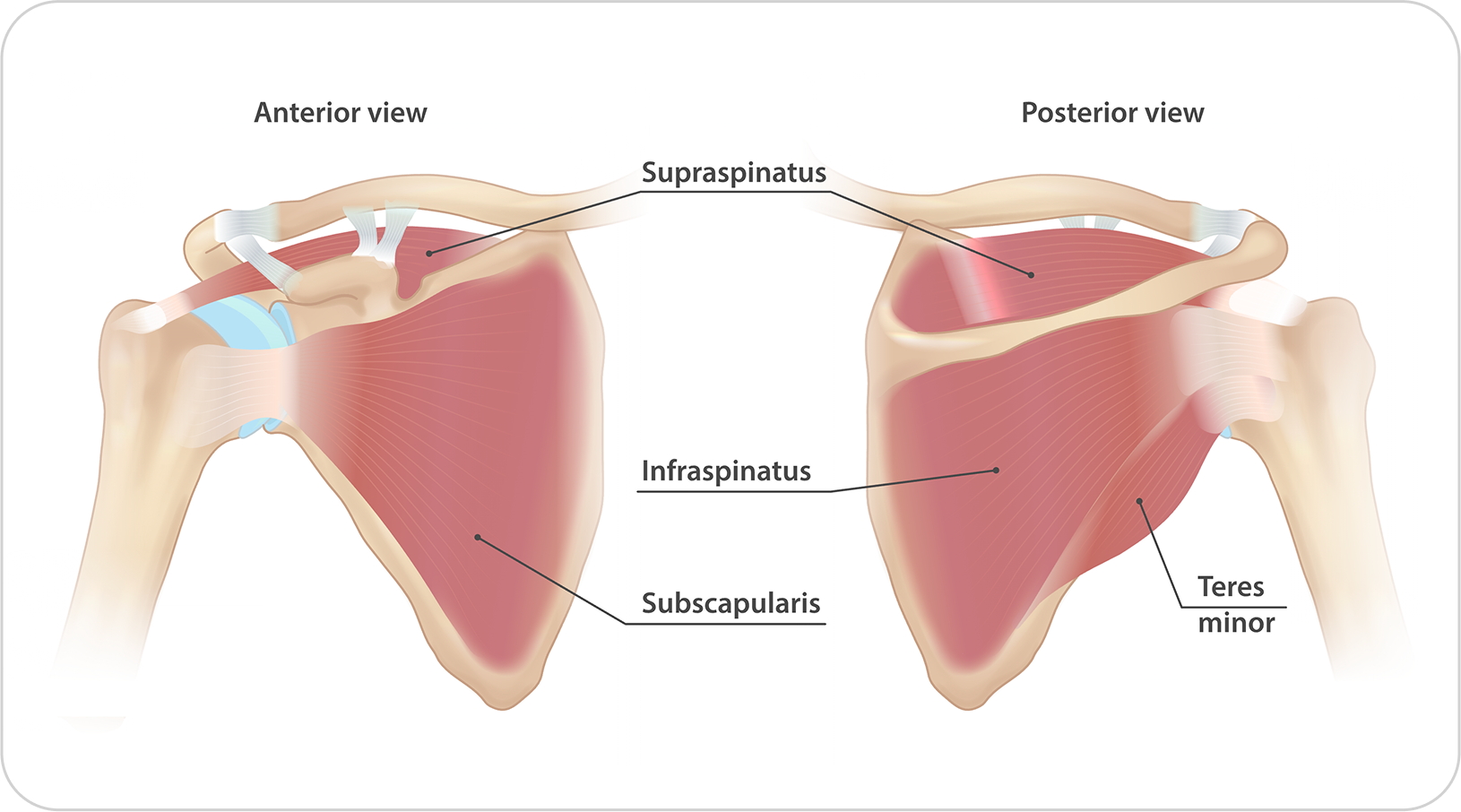
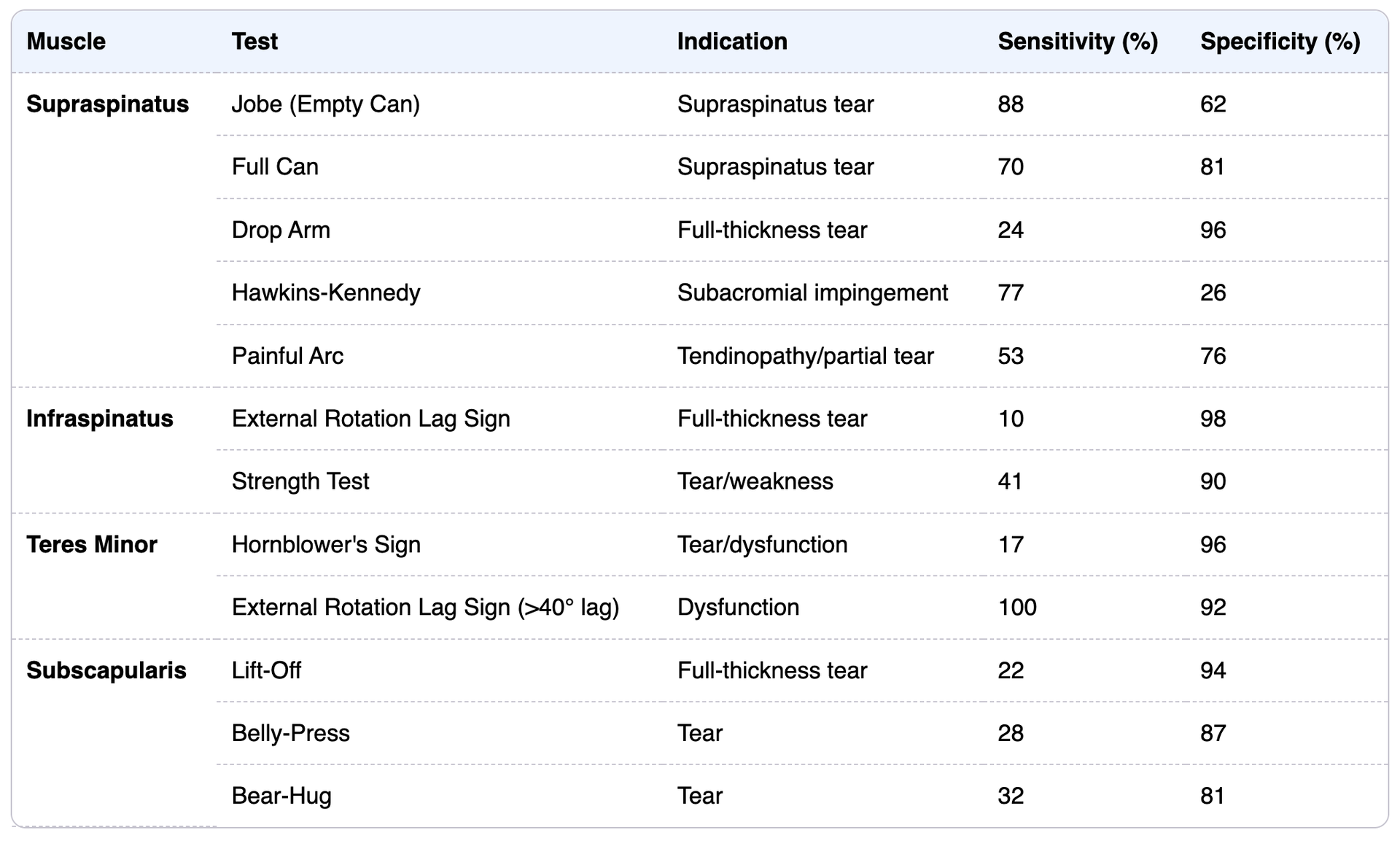
This week, we'll explore the latest clinical guidelines on rotator cuff injury, a common cause of shoulder pain.
Rotator cuff pathology encompasses a range of conditions, including tendinopathy, partial tears, and full-thickness tears. It frequently presents with shoulder pain, weakness, and restricted range of motion, particularly with overhead activities. Patients may report insidious onset or acute symptoms following trauma or repetitive overhead motions. Diagnosis relies on clinical history, physical examination findings (positive provocative tests such as Neer’s, Hawkins-Kennedy, and Jobe’s tests), and imaging studies, primarily ultrasound or MRI, to identify tendon integrity and tear severity.
Initial management typically involves conservative treatment, emphasizing activity modification, physical therapy for scapular stabilization and rotator cuff strengthening, and NSAIDs for symptom control. Corticosteroid injections may provide short-term relief in selected patients with significant pain limiting rehabilitation participation. Surgical intervention, such as arthroscopic repair, is indicated for significant acute full-thickness tears, chronic symptomatic tears unresponsive to conservative measures, or young patients with acute traumatic injuries.
Recent guidelines highlight an individualized approach to treatment decisions, considering patient age, tear size, muscle quality (e.g., fatty infiltration), functional demands, and symptom duration. Early surgical repair is generally favored for acute traumatic tears in active individuals, whereas chronic degenerative tears often warrant an extended conservative approach first. Advances in biologic therapies, including platelet-rich plasma (PRP) injections, are also emerging as adjunctive treatments, though current guidelines recommend further research to clarify their efficacy.
Guidelines on the evaluation and management of rotator cuff injury are from the Canadian Shoulder and Elbow Society (CSES 2023), the American Physical Therapy Association (APTA 2022), the American Academy of Orthopaedic Surgeons (AAOS 2020), and the British Medical Journal (BMJ 2019), among others.
For a full review of rotator cuff injury guidelines, head over to Pathway. We’ll cover some key takeaways below (with the recommendation strength in parentheses).