Date: Apr 24, 2024 • Issue no: #087
|
✅ Summarized 2024 Type 2 Diabetes Mellitus guidelines 🧠 Review the common signs and symptoms of Diabetes Mellitus ⭐ Review the updated options for treatment
📈 And more! |
|
|
In-depth review of key recent guidelines |
This week, we'll explore the latest clinical guidelines on type 2 diabetes mellitus, a chronic metabolic condition characterized by elevated blood sugar levels and impaired insulin function.
Blood glucose monitoring, including fasting blood sugar, HbA1c, and postprandial glucose levels, remains fundamental in assessing glycemic control and the severity of diabetes. Alongside these metrics, pay attention to symptoms like increased thirst, frequent urination, fatigue, and blurred vision. These can indicate fluctuations in blood sugar levels and guide adjustments in treatment plans. Research, such as the United Kingdom Prospective Diabetes Study (UKPDS), emphasizes the importance of tight glycemic control in type 2 diabetes management. Keeping blood sugar levels within target ranges reduces the risk of complications like nerve damage, kidney disease, and cardiovascular issues.
Imaging modalities such as retinal photography, foot examination, and nerve conduction studies play crucial roles in diagnosing diabetes-related complications, such as diabetic retinopathy, neuropathy, and foot ulcers. Continuous glucose monitoring (CGM) systems have emerged as valuable tools for real-time monitoring of blood sugar levels and guiding treatment decisions.
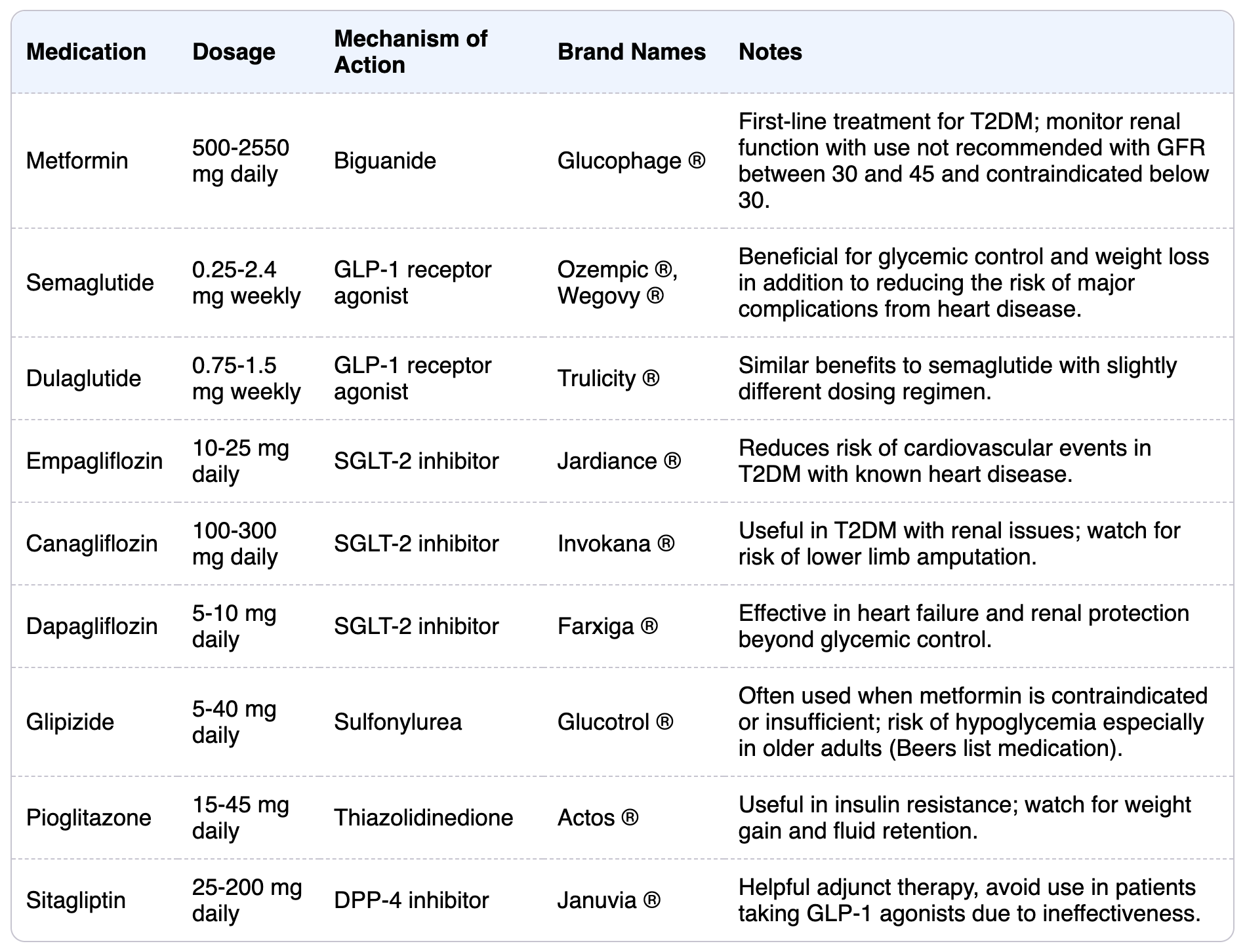
Management of diabetes involves addressing its complications, including diabetic ketoacidosis, hyperosmolar hyperglycemic state, and cardiovascular disease. Therapeutic interventions encompass pharmacological agents, such as insulin, metformin, GLP-1 receptor agonists, and SGLT2 inhibitors, as well as lifestyle modifications including diet, exercise, and weight management. Guidelines on the evaluation and management of Diabetes Mellitus are from the American Diabetes Association (ADA 2024), the American Academy of Family Physicians (AAFP 2024), and the American College of Physicians (ACP 2024), among others. For a full review of diabetes mellitus guidelines, head over to Pathway. We’ll cover some key takeaways below (with the recommendation strength in parentheses). |
|
|
1.) Screening and Diagnosis: -
Consider testing for prediabetes or T2DM in asymptomatic adults of any age with overweight or obesity (BMI ≥ 25 kg/m² or ≥ 23 kg/m² in Asian American individuals) having ≥ 1 risk factor, such as a first-degree relative with diabetes, hypertension, history of CVD, physical inactivity, among others. (C)
- Begin screening at age 35 years in all other individuals. (B)
-
Obtain screening for prediabetes and diabetes in patients prescribed second-generation antipsychotic medications at baseline and repeat 12-16 weeks after medication initiation or sooner, if clinically indicated, and annually thereafter. (B)
-
Diagnose diabetes based on HbA1c or blood glucose criteria, either the FBG value, 2-hour blood glucose value during a 75-g OGTT, or random glucose value accompanied by classic hyperglycemic symptoms/crises criteria:
-
hbA1c ≥ 6.5% (≥ 48 mmol/mol), obtained in a laboratory using a method that is National Glycohemoglobin Standardization Program-certified and standardized to the Diabetes Control and Complications Trial assay
- fasting blood glucose ≥ 126 mg/dL (≥ 7.0 mmol/L) with no caloric intake for at least 8 hours prior to testing
- 2-hour blood glucose ≥ 200 mg/dL (≥ 11.1 mmol/L) during OGTT, obtained as described by the WHO, using a glucose load containing the equivalent of 75 g anhydrous glucose dissolved in water
-
a random blood glucose ≥ 200 mg/dL (≥ 11.1 mmol/L) in patients with classic symptoms of hyperglycemia or hyperglycemic crisis, obtained at any time of the day without regard to the time since previous meal. (A)
-
Obtain confirmatory testing (two abnormal test results obtained at the same time or at two different time points) for the diagnosis in the absence of unequivocal hyperglycemia (such as hyperglycemic crises). (A)
2.) Diagnostic Investigations: -
Measure BP at every routine clinical visit. Confirm BP using multiple readings, when possible, in patients found to have elevated BP (SBP 120-129 mmHg and diastolic < 80 mmHg), including measurements on a separate day, to diagnose hypertension. (A)
-
Diagnose hypertension in case of an SBP ≥ 130 mmHg or a DBP ≥ 80 mmHg based on an average of ≥ 2 measurements obtained on ≥ 2 occasions. (A)
-
Do not obtain routine screening for coronary artery disease in asymptomatic patients, as it does not improve outcomes as long as ASCVD risk factors are treated. (D)
-
Obtain screening for PAD with ankle-brachial index testing in asymptomatic patients ≥ 50 years old with diabetes and microvascular disease in any location, foot complications, or any end-organ damage from diabetes to guide treatment for CVD prevention and limb preservation. (A)
- Obtain a lipid profile at the initiation of statins or other lipid-lowering therapy, 4-12 weeks after initiation or a change in dose, and annually thereafter to monitor the response to therapy and inform medication taking. (A)
-
Obtain screening/risk stratification for clinically significant liver fibrosis (defined as moderate fibrosis to cirrhosis) using a calculated fibrosis-4 index (derived from age, ALT, AST, and platelets) in adult patients with T2DM or prediabetes, particularly with obesity or cardiometabolic risk factors/established CVD, even if they have normal liver enzymes. (B)
- Assess urinary albumin (such as spot urinary albumin-to-creatinine ratio) and eGFR at least annually in all patients with T2DM, regardless of treatment. (B)
-
Obtain an initial dilated and comprehensive eye examination by an ophthalmologist or optometrist at the time of diagnosis in patients with T2DM. (B)
-
Screen for diabetic peripheral neuropathy in all patients with T2DM starting at diagnosis and at least annually thereafter. (B)
-
Obtain comprehensive foot evaluations at least annually to identify risk factors for ulcers and amputations. (A)
- Include the following in the foot examination:
-
inspection of skin
- assessment of foot deformities
- neurological assessment (10-g monofilament testing with at least one other assessment: pinprick, temperature, or vibration)
-
vascular assessment, including pulses in the legs and feet. (B)
3.) Medical Management: - Set an HbA1c goal of < 7% (< 53 mmol/mol) without significant hypoglycemia in many nonpregnant adult patients with diabetes. (A)
-
Include healthy lifestyle behaviors, weight management, diabetes self-management education and support, avoidance of therapeutic inertia, and social determinants of health in the glucose-lowering management of T2DM. (A)
-
Add an SGLT-2 inhibitor (to reduce the risk of all-cause mortality, major adverse cardiovascular events, progression of CKD, and hospitalization due to congestive Heart Failure) or a GLP-1 receptor agonist (to reduce the risk of all-cause mortality, major adverse cardiovascular events, and stroke) to metformin and lifestyle modifications in adult patients with T2DM with inadequate glycemic control. (A)
- Do not add a DPP4 inhibitor to metformin and lifestyle modifications in adult patients with T2DM with inadequate glycemic control to reduce morbidity and all-cause mortality. (D)
-
Consider initiating insulin in adult patients with T2DM with evidence of ongoing catabolism (such as unexpected weight loss), symptoms of hyperglycemia, or very high HbA1c or blood glucose levels (HbA1c > 10% or blood glucose ≥ 300 mg/dL), regardless of background glucose-lowering therapy or disease stage. (E)
-
Prefer GLP-1 receptor agonists, including a dual glucose-dependent insulinotropic polypeptide and GLP-1 receptor agonist, over insulin in adult patients with T2DM. (A)
|
4.) Follow-up and Monitoring: -
Assess glycemic status by HbA1c and/or appropriate continuous glucose monitoring metrics at least twice a year. Obtain more frequent (such as every 3 months) assessments in patients not meeting treatment goals, with frequent or severe hypoglycemia or hyperglycemia, changing health status, or growth and development in youth. (E)
-
Consider using standardized, single-page glucose reports from continuous glucose monitoring devices with visual cues, such as the ambulatory glucose profile, as a standard summary for all continuous glucose monitoring devices. (E)
-
Provide blood glucose monitoring devices to patients with diabetes as indicated by their circumstances, preferences, and treatment. (A)
-
Consider measuring time in range for the assessment of glycemic control, as it is associated with the risk of microvascular complications. Consider measuring time below range and time above range additionally for the evaluation of the treatment plan. (C)
-
Refer adult patients with overweight or obesity at high risk of T2DM, as seen in the Diabetes Prevention Program, to an intensive lifestyle behavior change program to achieve and maintain a weight reduction of at least 7% of initial body weight through healthy reduced-calorie diet and ≥ 150 minute/week of moderate-intensity physical activity. (A)
|
|
|
Fast, reliable clinical answers |
Double check your clinical decisions and find evidence-based answers, without the fluff. Check it out for yourself – it's free to use. |
|
|
|
Will you change your practice
behaviors based on the content in
today's newsletter?
|
|
|
|
|
|
|
|
|
|
|
Pathway Medical Inc. | All rights reserved | Unsubscribe |
|
|
|