Oral semaglutide for the heart
|
What is the effect of oral semaglutide in patients with T2DM, ASCVD and/or CKD? -
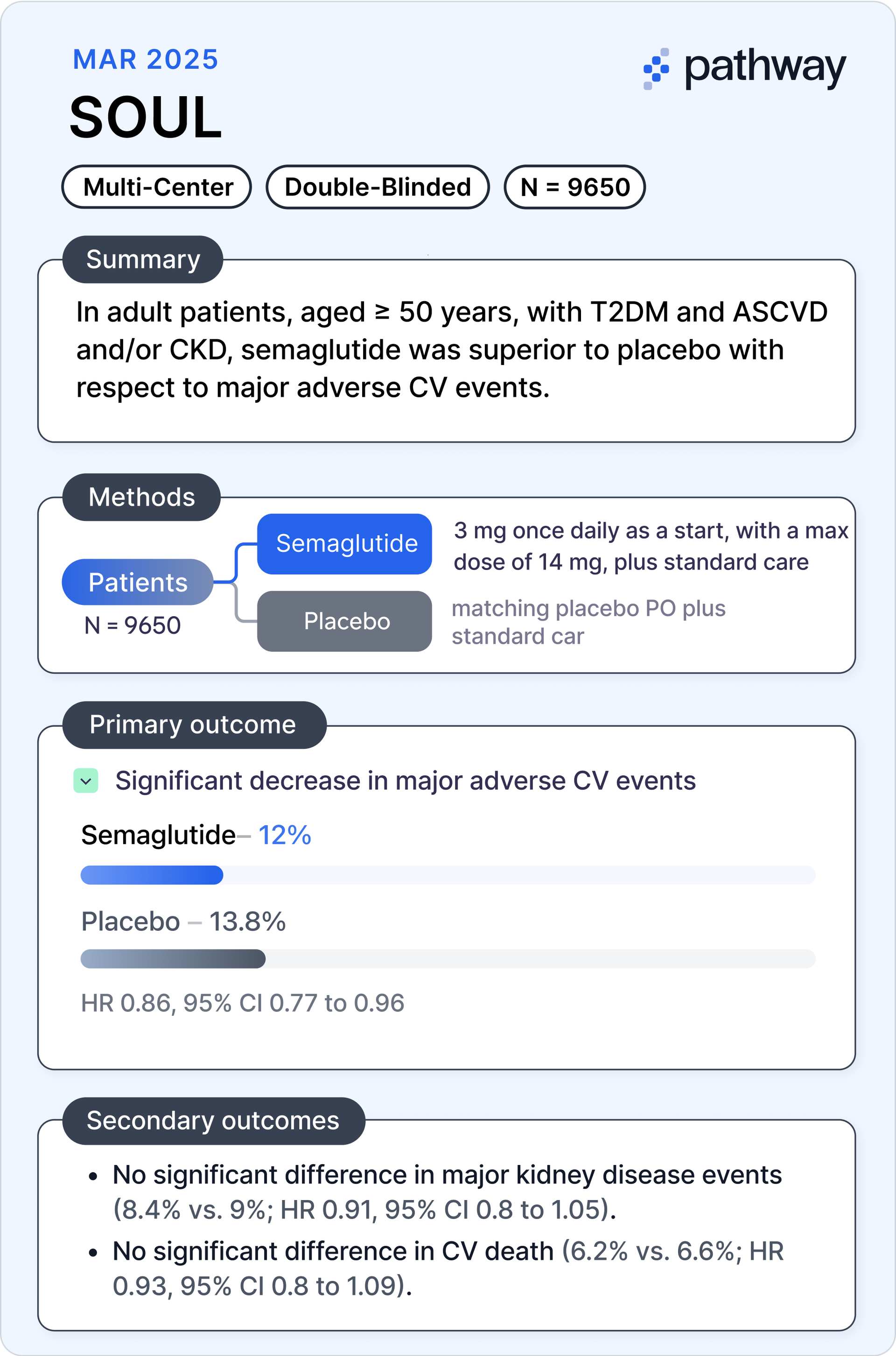
The SOUL trial (March 2025, n=9650) compared semaglutide (3 mg once daily as a starting dose, with a maximum dose of 14 mg, plus standard care) to a matching placebo in adult patients, aged ≥ 50 years, with T2DM and ASCVD and/or CKD. The key exclusion criteria included ESRD, receipt of long-term RRT, MI, stroke, hospitalization for unstable angina pectoris or TIA within the past 60 days, planned coronary, carotid, or peripheral artery revascularization, or treatment with any GLP-1 receptor agonist within the past 30 days.
- There was a significant decrease in major adverse CV events (12% vs. 13.8%; HR 0.86, 95% CI 0.77 to 0.96, NNT=55). One of the secondary outcomes showed a significant decrease in major adverse limb events (1.5% vs. 2.1%; HR 0.71, 95% CI 0.52 to 0.96).
Conclusion: In adult patients aged ≥ 50 with T2DM, ASCVD, and/or CKD, semaglutide was superior to placebo with respect to major adverse CV events.
You’ll find more of the latest studies relevant to primary care below. For a more comprehensive catalog of recent practice-changing trials, head over to Pathway!
What is the effect of a strategy of upfront routine thoracentesis in patients with acute HF and pleural effusion? -
The TAP-IT trial (March 2025, n=243) compared thoracentesis (upfront ultrasound-guided pleural pigtail catheter thoracentesis in addition to standard medical therapy) to standard medical therapy alone in adult patients with acute HF, LVEF ≤ 45%, and pleural effusion. The key exclusion criteria included indication for diagnostic thoracentesis, contraindication to thoracentesis, severely impaired hemodynamics or respiratory failure, massive effusion occupying more than two-thirds of the hemithorax, pulmonary or pleural infections, intrathoracic procedure within 3 months, severe aortic stenosis, eGFR < 15 mL/min/1.73 m², or dialysis.
-
There was no significant difference in the median number of days alive out of the hospital over the following 90 days (84 days vs. 82 days; AD 2 days, 95% CI -2.78 to 6.78). One of the secondary outcomes saw no significant difference in the number of days alive and not hospitalized because of HF within 90 days (85 days vs. 84 days; AD 1 day, 95% CI -0.39 to 2.39).
Conclusion: In adult patients with acute HF, LVEF ≤ 45%, and pleural effusion, thoracentesis was not superior to standard medical therapy with respect to median number of days alive out of the hospital over the following 90 days. What is the role of liraglutide in children with obesity? -
The SCALE-KIDS trial (Feb 2025, n=82) compared liraglutide (subcutaneous dose of 3 mg once daily or maximum tolerated dose plus lifestyle intervention) to a matching placebo in children aged 6-12 years with obesity. The key exclusion criteria included self-reported change in body weight > 5 kg within 90 days before screening, treatment with any medication for the indication of obesity within the past 90 days before screening, T1DM, or secondary causes of obesity.
- There was a significantly greater reduction in mean BMI at 56 weeks (5.8% vs. -1.6%; MD 7.4, 95% CI 3.2 to 11.6, NNT=13). There was also a significant increase in participants with ≥ 5% reduction in BMI at 52 weeks (46% vs. 9%; OR 6.3, 95% CI 1.4 to 28.8).
Conclusion: In obese children aged 6-12, liraglutide was superior to placebo in terms of mean BMI reduction at 56 weeks. |
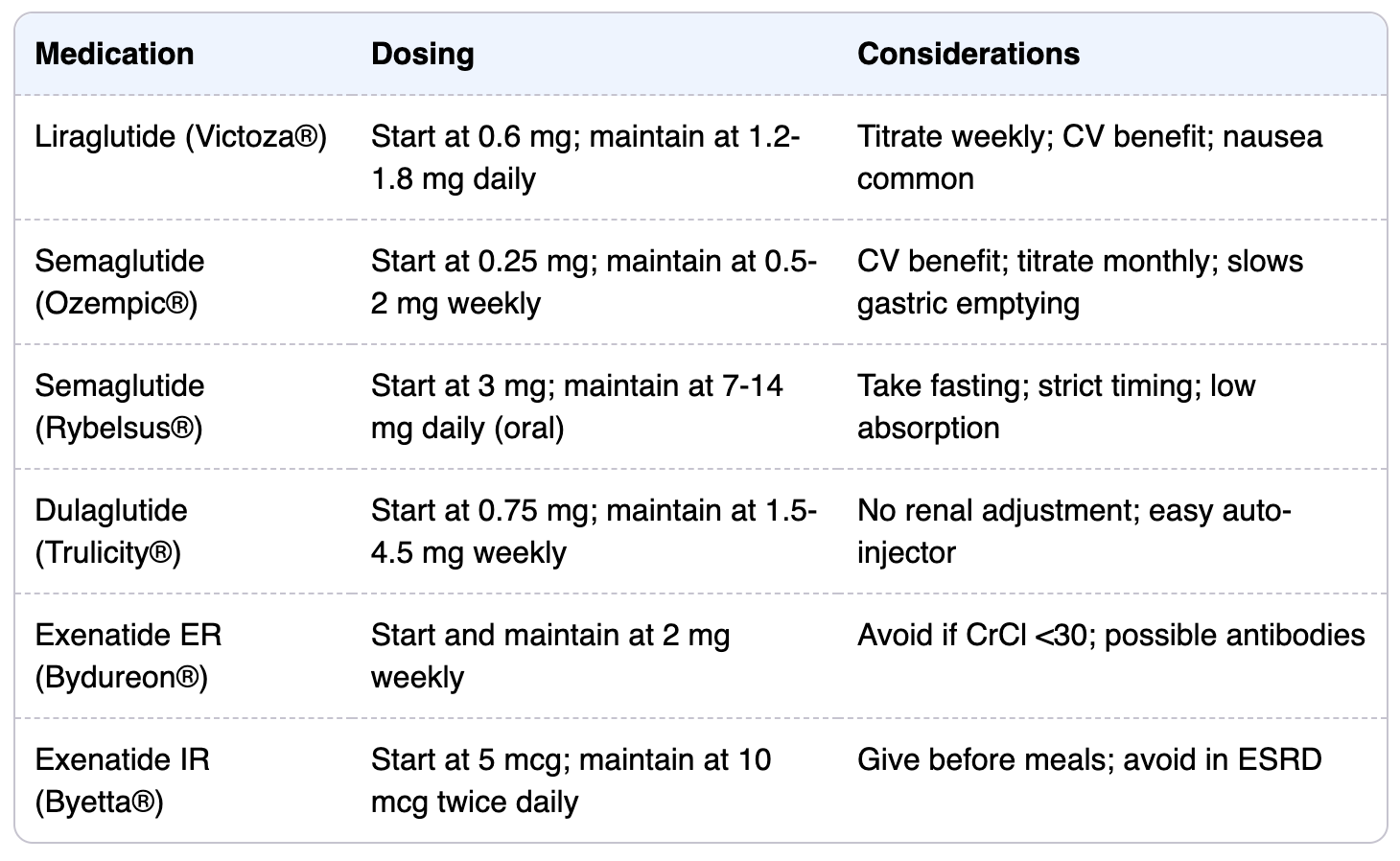
GLP-1 meds, dosing, and important considerations Acknowledgements: - Editorial Team: Jeremy Swisher, MD, Cole Phillips, MD, Khudhur Moh, MD, Hovhannes Karapetyan, MD
|
|
|