🗞 Rapid Fire: Guideline Summaries
|
You’ll find some of the newest guidelines relevant to Primary Care below, along with a few key takeaways from each one of them. Some of these guidelines are dense – but don’t worry, over at Pathway, they’re all neatly summarized and broken down into digestible chunks to make them easier to understand. 🔥 Diabetic Foot - from the American Diabetes Association (ADA 2025) and the Society for Vascular Medicine (SVM/SVS/APMA 2016): -
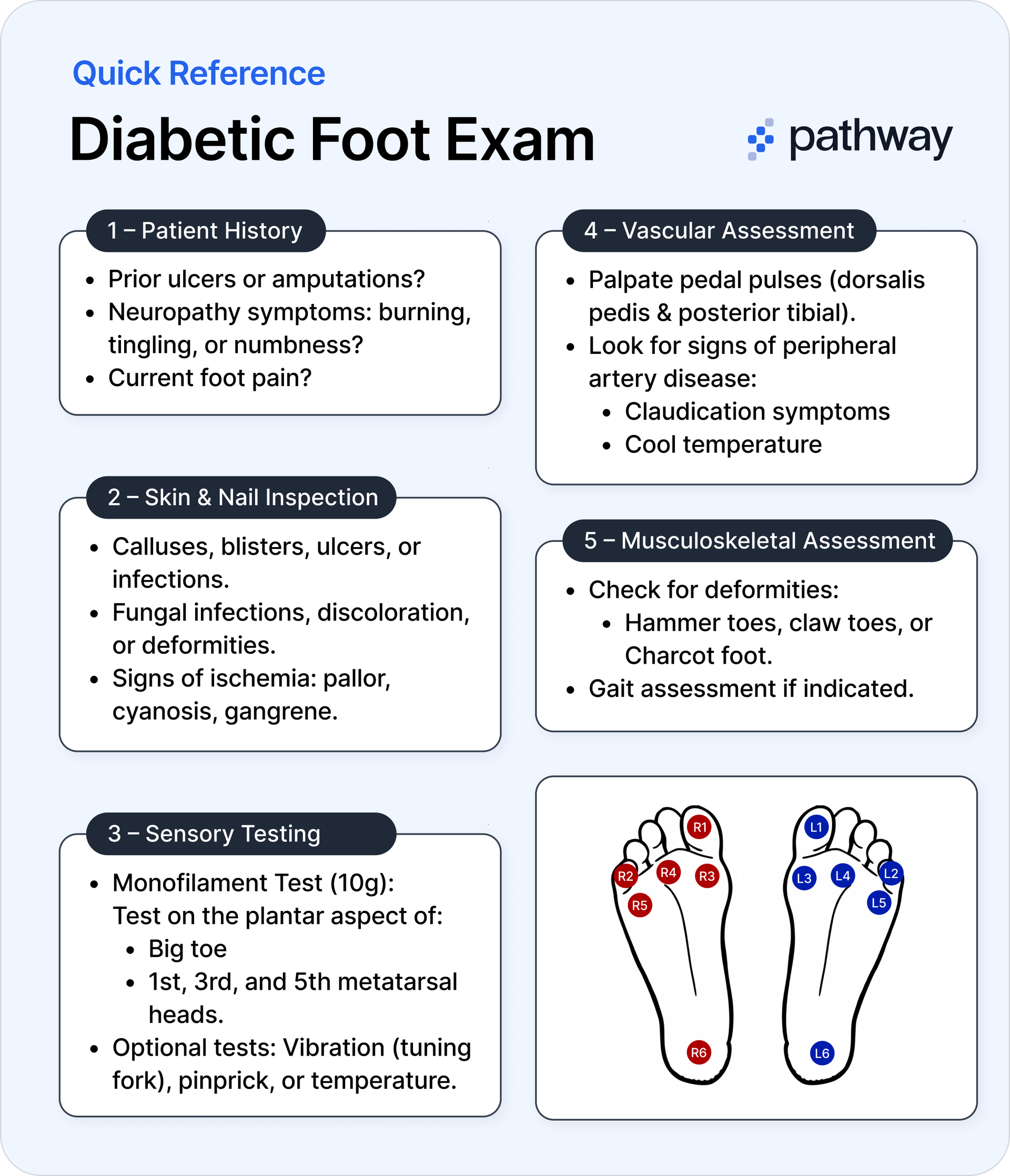
Obtain comprehensive foot evaluations at least annually to identify risk factors for ulcers and amputations. (A)
-
Perform foot inspection at every visit in patients with evidence of sensory loss or a history of ulceration or amputation. (A)
-
Screen for diabetic neuropathy by foot examination (including foot inspection, assessment of foot pulses, pinprick, 10-g monofilament sensation tests, testing of vibration sensation using a 128-Hz tuning fork, and ankle reflex tests) at diagnosis and annually thereafter in young patients with T2DM. (B)
-
Obtain screening for PAD with ankle-brachial index testing in asymptomatic patients with diabetes aged ≥ 65 years and microvascular disease in any location, foot complications, or any end-organ damage from diabetes if PAD diagnosis would change management. (B)
- Offer specialized therapeutic footwear to high-risk patients with diabetes, including patients with loss of protective sensation, foot deformities, ulcers, callous formation, poor peripheral circulation, and a history of amputation. (B)
-
Consider offering adjunctive treatment with RCT-proven advanced agents (such as negative pressure wound therapy, placental membranes, bioengineered skin substitutes, several acellular matrices, autologous fibrin and leukocyte platelet patches, and topical oxygen therapy) in patients with chronic diabetic foot ulcers that failed to heal with optimal standard care alone. (B)
|
🔑 Keloids - from the American Academy of Family Physicians (AAFP 2024): -
Offer pressure dressings as first-line therapy for burn injuries and to reduce keloid thickness, erythema, and hardness. (B)
-
Offer multiple sessions of cryotherapy to promote keloid regression, with intralesional cryotherapy being more effective than spray cryotherapy. (B)
-
Offer intralesional corticosteroids for the treatment of keloids and hypertrophic scars. (B)
-
Offer onabotulinumtoxinA injection as a first-line treatment for keloids and hypertrophic scars, with greater pain and patient-reported effectiveness compared with corticosteroid injection. (B)
🦠 Anal Cancer - from the American Society of Clinical Oncology (ASCO 2024), the American Academy of Family Physicians (AAFP 2024), and the Society for Immunotherapy of Cancer (SITC 2023), among others: - Consider performing a digital anal rectal examination every 2-5 years in MSM aged ≥ 50 years. (C)
-
Consider performing digital anal rectal examination each year in HIV-positive MSM aged ≥ 35 years. (C)
-
Offer HPV immunization in < 26 years old males and females in order to prevent anal squamous cell cancer. (B)
-
Elicit history, perform physical examination, and obtain laboratory testing to identify patients at increased risk for anal squamous neoplasms, such as HIV-positive individuals, MSM, and females with a history of cervical dysplasia. (B)
-
Obtain high-resolution T2-weighted MRI for optimal assessment of primary tumor and lymph nodes. (B)
🧠 Acute Ischemic Stroke - from the American College of Cardiology (ACC 2024), the American Diabetes Association (ADA 2025), and the American Heart Association (AHA/ASA 2024), among others: - Consider obtaining TEE in patients without an obvious cause of stroke but with a positive diagnosis of right-to-left shunt on initial assessment, to gain additional information about the presence and anatomy of the patent foramen ovale. (E)
- Initiate lower doses of ethinylestradiol in patients considering combined hormonal contraception to minimize potential increased stroke risk. (B)
-
Consider offering pioglitazone to lower the risk of stroke or myocardial infarction in patients with a history of stroke and evidence of insulin resistance and prediabetes while balancing the benefits with the increased risk of weight gain, edema, and fractures. (B)
-
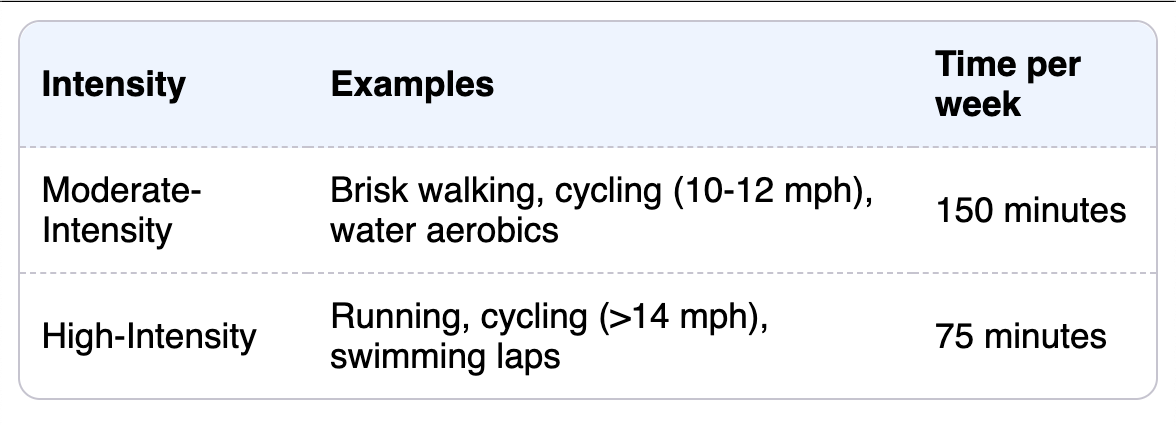
Counsel patients to engage in at least 150 minutes of moderate-intensity physical activity, 75 minutes of vigorous-intensity physical activity, or an equivalent combination per week to reduce the risk of stroke. (B)
-
Consider offering bariatric surgical procedures in patients with class II obesity (35-39.9 kg/m²) or greater to promote weight loss and reduce the risk of stroke. (C)
-
Offer lifestyle improvement and initiate antihypertensive drug treatment in patients with stage 2 hypertension or stage 1 hypertension with a higher risk for ASCVD to achieve a BP < 130/80 mmHg to prevent stroke. (A)
|
👀 Diabetic Retinopathy - from the American Diabetes Association (ADA 2025):
-
Obtain an initial dilated and comprehensive eye examination by an ophthalmologist or optometrist at the time of diagnosis in patients with T2DM and within 5 years after the onset of diabetes in adult patients with T1DM. (B)
- Implement strategies to help reach glycemic goals to slow the progression of diabetic retinopathy. (A)
-
Implement strategies to help reach BP and lipid goals to slow the progression of diabetic retinopathy. (A)
-
Recognize that the presence of retinopathy is not a contraindication to aspirin therapy for cardioprotection, as aspirin does not increase the risk of retinal hemorrhage. (A)
-
Consider repeating screening every 1-2 years if there is no evidence of retinopathy from one or more annual eye exams and glycemic indicators are within the goal range. (C)
|
Acknowledgments: - Editorial Team: Jeremy Swisher, MD, Cole Phillips, MD, Khudhur Moh, MD, Hovhannes Karapetyan, MD
|
|
|