Date: July 3, 2024 • Issue no: #097
|
🦠 Syphilis Scenario ✅ Review the common diagnostic guidelines
📚 Key pearls for important patient questions 🧵 And more! |
|
|
🧠 Test your Knowledge: A Syphilis Scenario |
Keep sharpening your clinical skills |
A 32-year-old male presents to the clinic with a painless genital ulcer and reports recent unprotected sexual contact with multiple partners. On examination, you note a single, firm, non-tender ulcer with clean edges and regional lymphadenopathy. Based on these findings, which of the following treatments is the most appropriate initial therapy? [A] Penicillin G benzathine [B] Doxycycline [C] Ceftriaxone [D] Azithromycin Scroll down to find the answer at the end! 👇
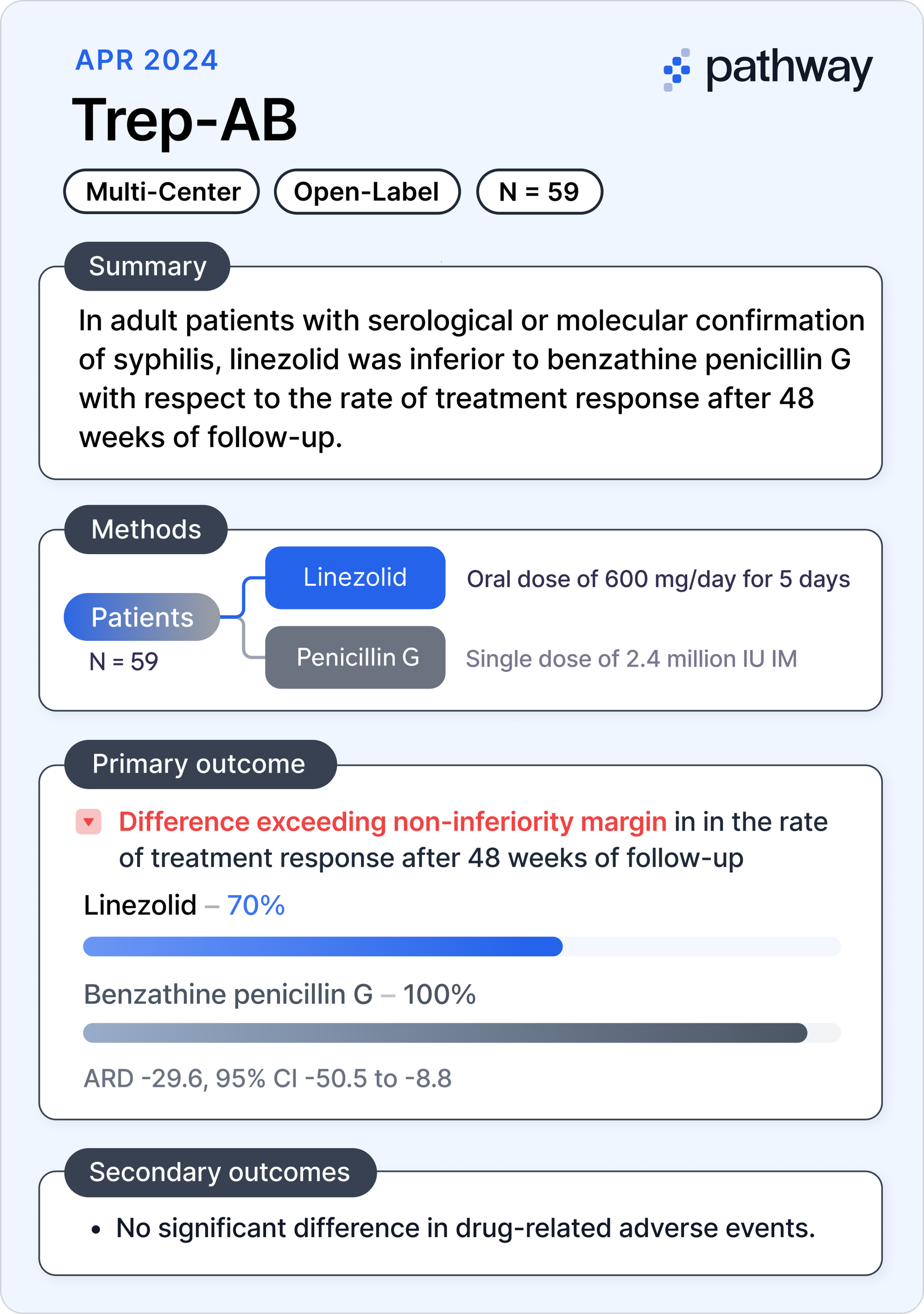
Need to refresh your memory before answering this question? Head over to Pathway to review the latest guidelines on Syphilis, as well as some landmark trials.
Our editorial team prepared the following summarized guidelines for the evaluation and management of Peripheral Artery Disease based on guidelines from the American College of Obstetricians and Gynecologists (ACOG 2024), the Center for Disease Control (CDC 2024), and the Infectious Diseases Society of America (IDSA/CDC/NIH/HIVMA 2024), among others. |
Answer - A. Penicillin G benzathine
Explanation - This patient’s presentation is consistent with syphilis, which typically manifests as a painless genital ulcer known as a chancre. Syphilis is caused by the bacterium Treponema pallidum, which can be transmitted through sexual contact or from mother to child during pregnancy.
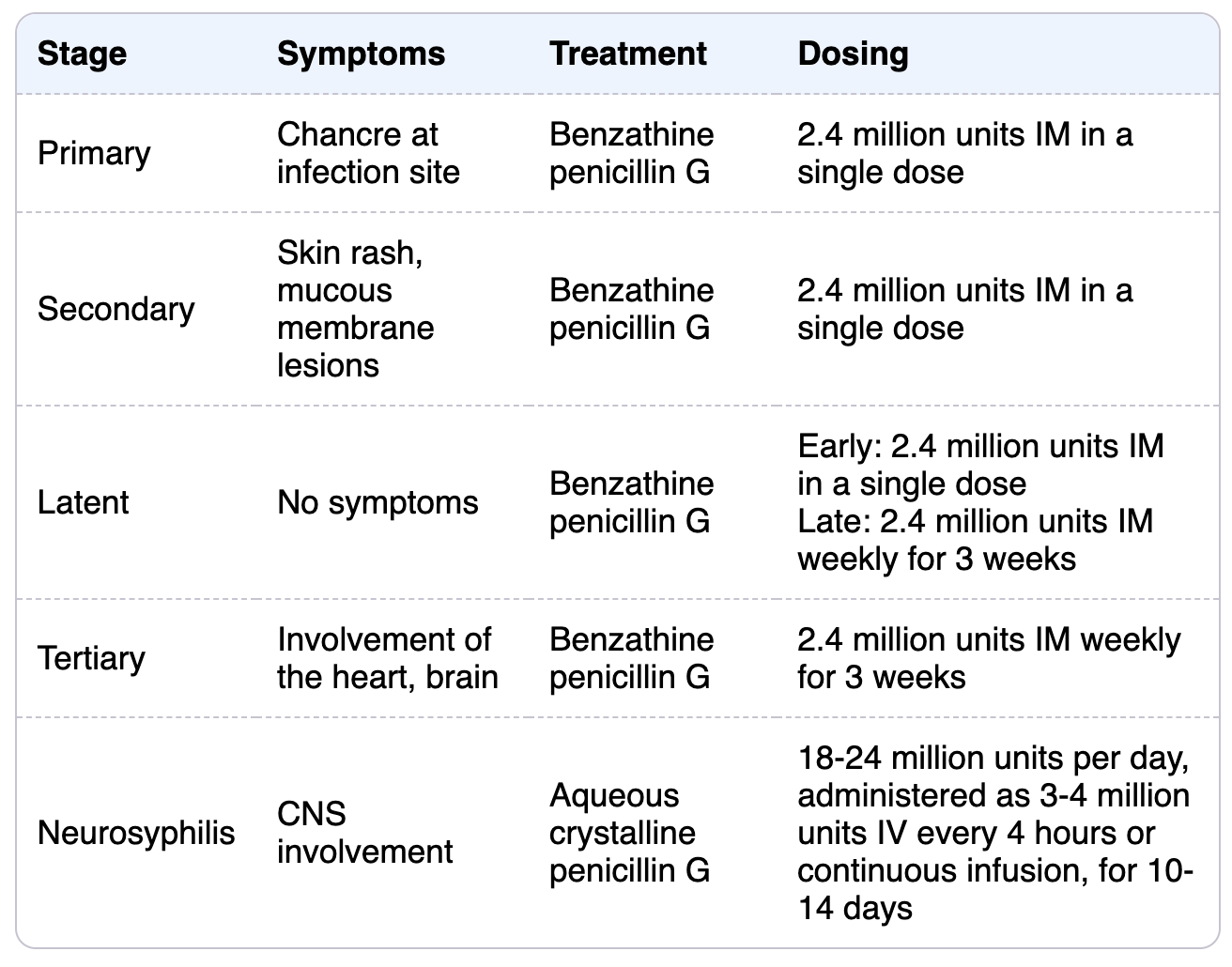
Penicillin G benzathine, administered as a single intramuscular dose, is the recommended treatment for primary and early latent syphilis according to current CDC guidelines. This antibiotic is highly effective in eliminating Treponema pallidum and preventing the progression of syphilis to its later stages, which can involve serious complications such as neurosyphilis and cardiovascular syphilis.
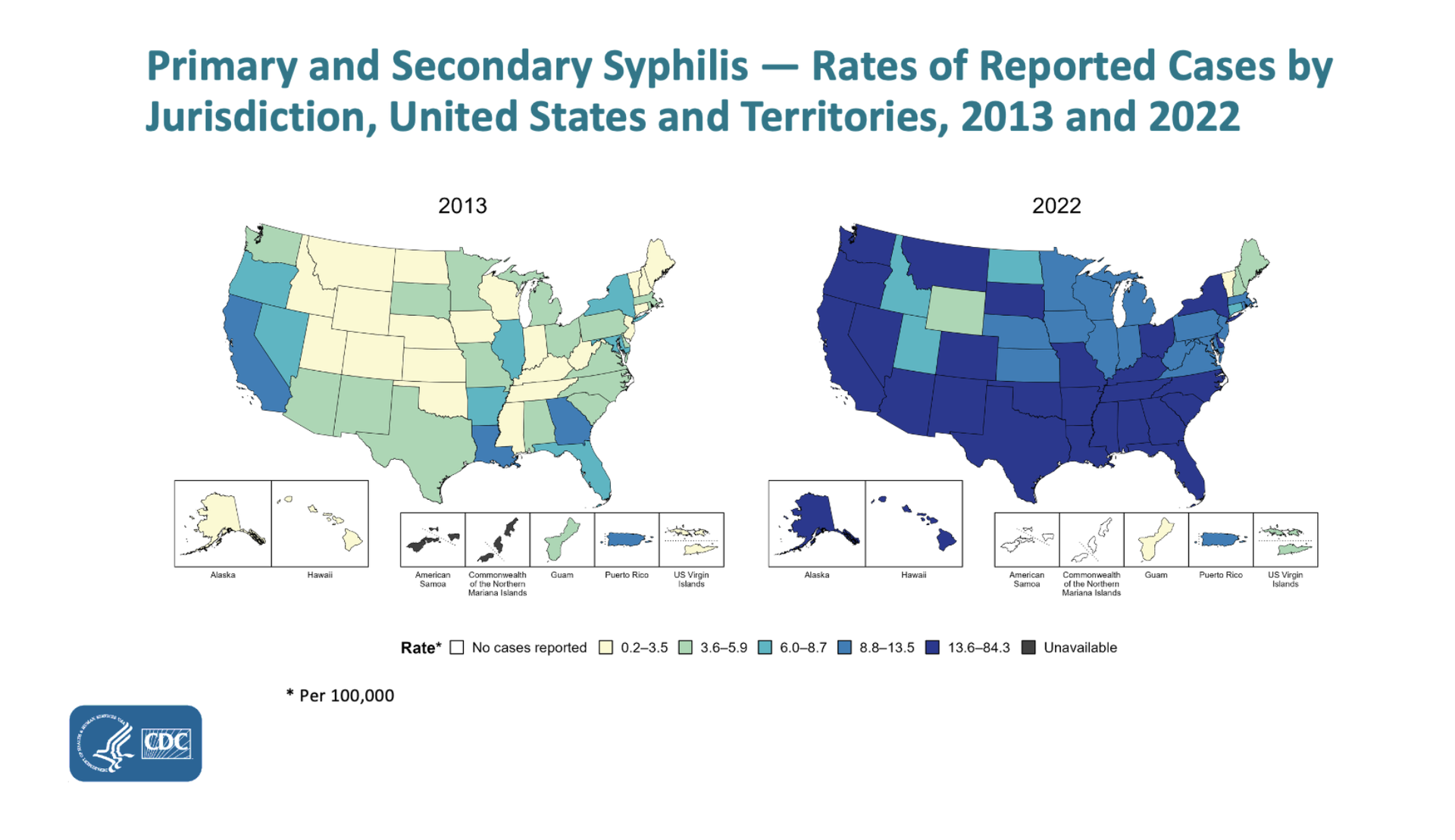
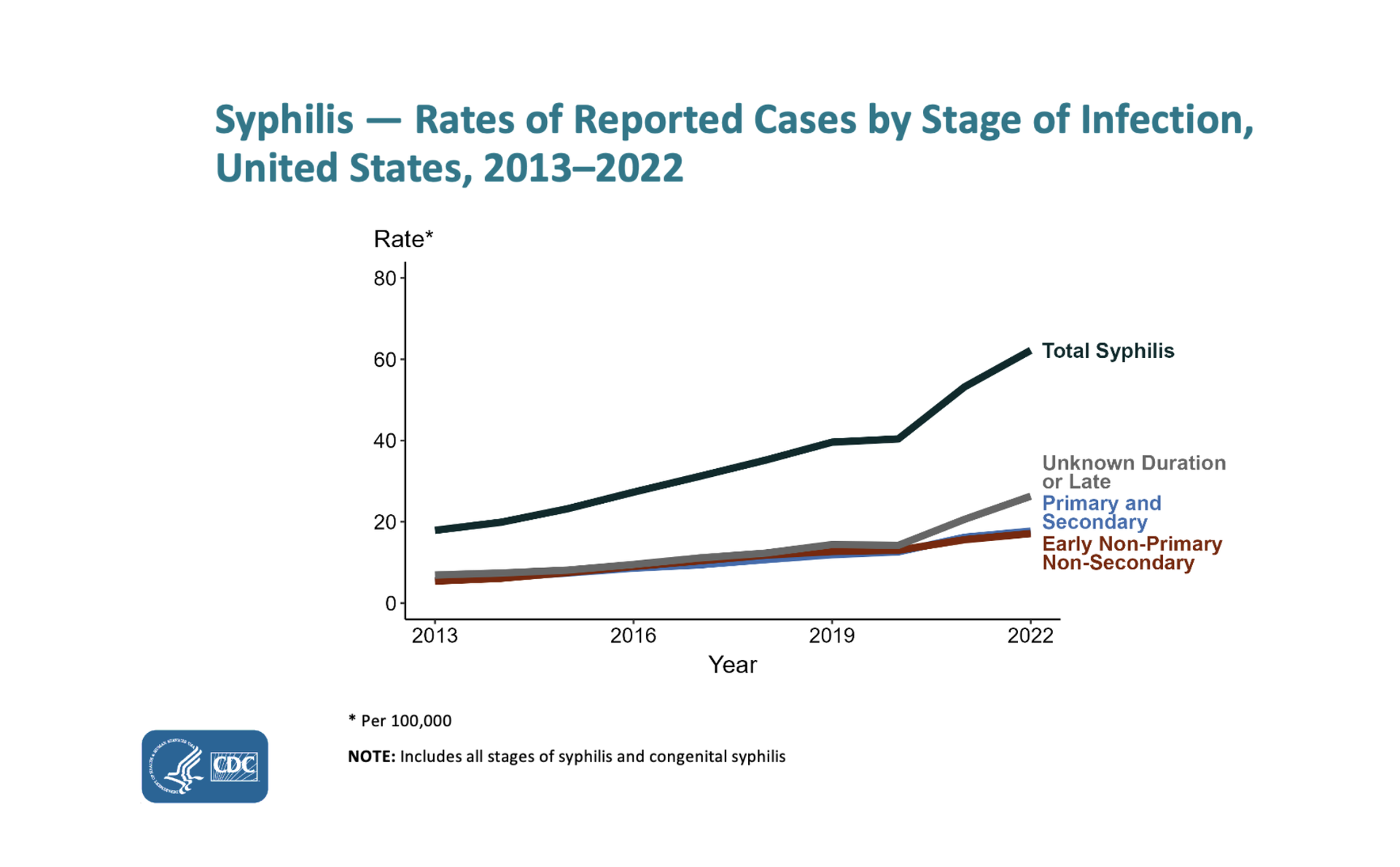
Early diagnosis and treatment of syphilis are crucial not only for curing the infection but also for preventing its transmission to others. Patients should also be screened for other sexually transmitted infections and counseled on safe sexual practices to reduce the risk of reinfection and transmission. Syphilis infection rates are on the rise in the US (see figures below) making the proper screening, accurate diagnosis, and appropriate treatment even more important.
|
|
|
What are the guideline recommendations for the diagnosis of syphilis? -
Obtain serological screening for syphilis in all pregnant individuals at the first prenatal care visit, followed by universal rescreening during the third trimester and at birth. (E)
-
Obtain a quantitative titer measurement on the first day of treatment to provide a baseline for measuring subsequent changes in antibody titers. (B)
-
Obtain serum testing at 1 month, 3 months, and every 6 months subsequently, ideally using the same non-treponemal test and performed in the same laboratory, continued until the non-treponemal test becomes negative or reaches a low plateau (1:1-1:4 sustained for 1 year in the absence of ongoing risk). (B)
-
Consider obtaining a closer follow-up (at 1, 3, 6, 9, and 12 months) in HIV-positive patients, particularly if the CD4 cell count is ≤ 350/mm³ and/or if the patient is not treated with antiretroviral therapy. (C)
|
What are the guideline recommendations for the medical management of syphilis? -
Administer benzathine penicillin G 2,400,000 units IM in a single dose in adult patients with primary or secondary syphilis. (E)
-
Offer presumptive treatment for early syphilis in individuals exposed sexually within 90 days preceding the diagnosis of primary, secondary, or early latent syphilis in a sex partner, regardless of syphilis serologic status. (B)
-
Offer presumptive treatment for early syphilis in individuals exposed sexually > 90 days before syphilis diagnosis in a sex partner, if syphilis serologic test results are not available immediately and the opportunity for follow-up is uncertain. (B)
-
Administer prednisolone 20-60 mg daily for 3 days and start syphilis treatment 24 hours after commencing prednisolone for the prevention of Jarisch-Herxheimer reaction. (B)
-
Administer benzathine penicillin G 2,400,000 units IM in a single dose in adult patients with early latent syphilis. (E)
-
Administer benzathine penicillin G 7,200,000 units IM, given as 3 doses of 2,400,000 units at 1-week intervals, in adult patients with late latent syphilis. (E)
|
Acknowledgements: Editorial Team: Jeremy Swisher, MD, Cole Phillips, MD, Khudhur Moh, MD, Hovhannes K, MD |
|
|
|
Will you change your practice
behaviors based on the content in
today's newsletter?
|
|
|
|
|
|
|
|
|
|
|
Pathway Medical Inc. | All rights reserved | Unsubscribe |
|
|
|